
Toddlers need to move, too
Physical activity among schoolchildren and teens gets plenty of attention. But what about babies who spend time strapped into car seats, toddlers who travel in strollers and preschoolers who run, climb and hop?
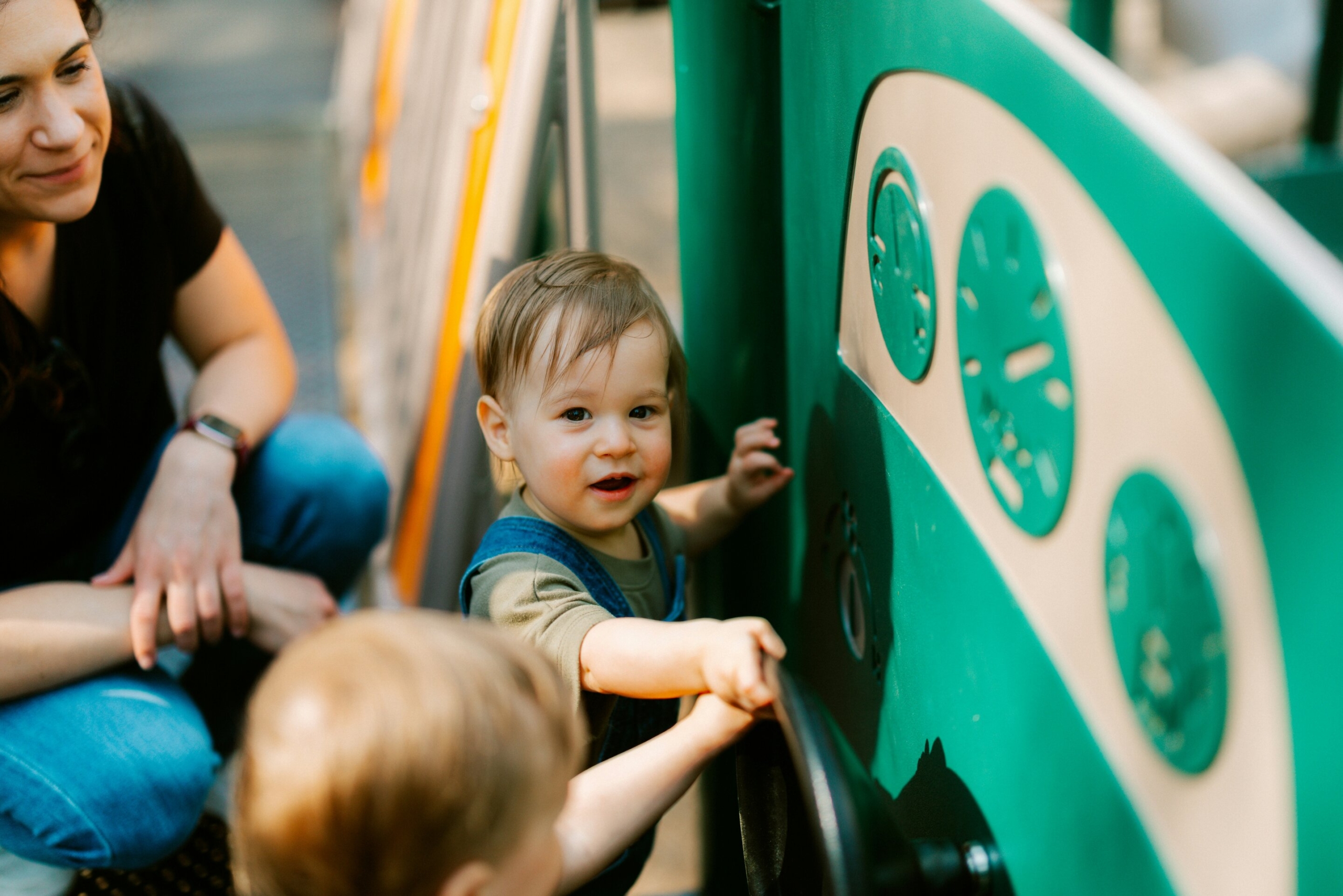
Credit: Unsplash/CC0 Public Domain
Medcial Xpress by Béatrice St-Cyr-Leroux, University of Montréal, November 2, 2026 edited by Swati Mestri, reviewed by Andrew Zinin
For the first time, ParticipACTION has devoted a full report card to children ages 0 to 4. Produced by a team of experts from Canada and abroad, the report defines 14 indicators for assessing the habits of very young children.
These indicators include not only physical activity but also sleep, screen time, sedentary behavior, play and the neighborhood and environment.
“We wanted to look at lifestyle itself,” said Marie-Eve Mathieu, a professor in the School of Kinesiology and Physical Activity Sciences at Université de Montréal and a member of the report card’s research committee.
The report card covers a wide range of factors in young children’s development: family habits, child care practices, the design of public spaces and the policies that affect their daily lives.
| Good sleep but too much screen time |
Kids scored their highest grades on the report card for sleep as well as gross and fine motor development. In both categories, 80% of young children met the recommendations.
Overall, the results also show that 67% of toddlers move enough. On the other hand, screen time is cause for concern, according to Mathieu.
“Nearly half of children, depending on age group, do not meet the recommendations on this front,” Mathieu said. “Screen time is not recommended at all for children under 2. For 2-, 3- and 4-year-olds, it should be limited to an hour a day—and in all cases, less is better.”
One of the reasons is that time in front of a screen crowds out opportunities to explore, handle objects, interact with others, move or engage in more enriching sedentary activities such as reading or puzzles.
| Get out of the stroller |
Mathieu also drew attention to a less intuitive finding: active transportation. Strollers and car seats are, of course, essential at times, but whenever possible and appropriate for the child’s age, walking, riding a small bike and scootering to the park, the day care center or the store are good ways for toddlers to stay active.
The 2026 ParticipACTION report card on physical activity for the early years, to which Mathieu contributed, was published on ParticipACTION’s website.
The report card notes that Canada’s 24-Hour Movement Guidelines offer concrete benchmarks for kids, as well:
- Babies who are not yet mobile should spend at least 30 minutes a day on their tummies, spread across several periods, while awake.
- Between ages 1 and 2, children should engage in physical activity of varying intensity for at least 180 minutes over the course of the day.
- The same minimum applies at ages 3 and 4, including at least 60 minutes of energetic play.
“The idea isn’t to turn a toddler’s day into a training program,” Mathieu said. “Running, dancing, climbing, crawling and playing outside may be all it takes to build movement into their routine. And unlike an organized sport, free play lets children explore at their own pace, make their own discoveries and invent their own activities.”
| Good habits beyond the family |
Parents play an essential role in children’s daily routines, but they’re not the only ones who have an impact. The report turns the spotlight on day care centers, municipalities and governments as key to toddlers’ development.
For example, day care workers can encourage active play, organize activities that promote motor development and limit screen use, Mathieu said. Early childhood education programs should place greater emphasis on children’s lifestyle habits, both in initial training and continuing education. A project led by Sylvana Côté, a professor in UdeM’s School of Public Health, aims to better equip day care staff in this area.
Access to parks, safe spaces for walking and playing, and facilities adapted to young children also supports healthy habits.
However, due to the economic disparities documented in the report, children don’t all have the same opportunities for movement and play.
Children from the lowest-income households are less likely to take part in structured physical activities (31% versus 52% in the highest-income households) and to have access to recreational facilities, playgrounds, parks and green spaces (79% versus 92%).
“Encouraging children to move also means creating conditions that make it possible for everyone,” Mathieu concluded.