
How orthosis wear time affects pectus carinatum outcomes
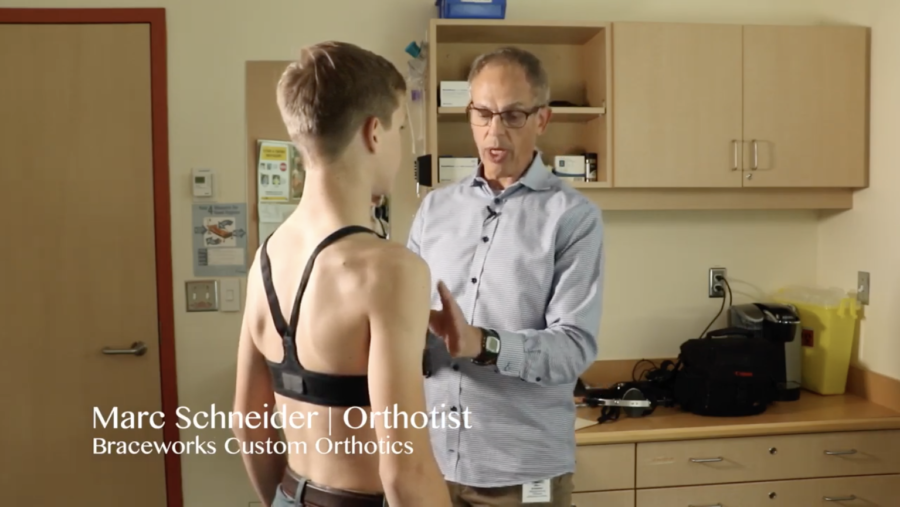
A study in the Journal of Prosthetics and Orthotics found that wearing a pectus carinatum orthosis at least 16 hours a day was associated with the greatest improvement in the deformity. The retrospective study also found that Pectus carinatum deformity worsens when the orthosis is worn minimally or not at all.
SmartBrief Spotlight on O&P Dec 16, 2025
| Abstract |
| Background |
Pectus carinatum compression orthoses are an effective treatment for pectus carinatum when the prescribed wear-time protocol is well adhered to. There is limited information on treatment outcomes when the daily wear-time protocol is not closely followed.
| Objective |
This study aims to assess the impact of patient-reported average daily wear time on pectus carinatum treatment outcomes.
| Study Design |
This is a retrospective cohort study of patients treated for pectus carinatum with a pectus carinatum orthosis.
| Methods |
We reviewed the medical records of 67 patients with pectus carinatum who were treated with a pectus carinatum orthosis. At each follow-up visit, we assessed patient-reported wear time and categorized each treatment interval between visits into one of four categories: fulltime wear (16+ hours), partial wear (8–15 hours), minimal wear (2–7 hours), and not wearing (0–1 hours). We used a multivariable linear mixed effects model to evaluate changes in chest anteriorposterior dimension by wear-time categories.
| Results |
Average improvement in pectus carinatum deformity was greatest during full-time wear visit intervals (−0.88 cm). Full-time wear visit intervals produced significantly greater improvement in deformity than all other categories (partial wear: P = 0.036; minimal wear: P < 0.0001; not wearing: P = 0.0003). Improvement in deformity decreased as average daily wear time decreased. Pectus carinatum deformity worsened during visit intervals in which the pectus carinatum orthosis was worn minimally (0.15 cm) or not at all (0.93 cm).
| Conclusions |
Average daily wear time significantly impacts outcomes in pectus carinatum orthotic treatment. Patient-reported daily wear time of 16 hours or greater produced the greatest improvement in deformity.
| Clinical relevance |
This study helps clinicians provide patients and families with detailed information regarding the effects of daily wear time on successful orthotic management of pectus carinatum.
| Copyright © 2025 American Academy of Orthotists and Prosthetists |
Source SmartBrief Spotlight on O&P
| References |
Effect of Orthosis Daily Wear Time on Pectus Carinatum Treatment Outcomes, Patrick, Natalie W. MSPO, CPO; Mincone, Hollie R. MSPO, CO; Vallery, Claire E. MPO, CPO; Kemper, Amanda T. MPO; Yosef, Matheos PhD; Khalatbari, Shokoufeh H. MS; Frank, Christopher J. MD, PhD; Richards, Jennifer A. MA, CPO. Journal of Prosthetics and Orthotics 38(1):p 21-26, January 2026. | DOI: 10.1097/JPO.0000000000000567
| Further reading |
Modeling of the chest wall response to prolonged bracing in pectus carinatum, Sargent B, Varela K, Eggett D, McKenna E, Bates C, Brown R, Garcia V, Howell L. PLoS One. 2023 Aug 14;18(8):e0288941. doi: 10.1371/journal.pone.0288941. Full text, PDF
Effectiveness of Compressive External Bracing in Patients with Flexible Pectus Carinatum Deformity: A Review, Hunt I, Patel AJ. Thorac Cardiovasc Surg. 2020 Jan;68(1):72-79. doi: 10.1055/s-0039-1687824. Epub 2019 Apr 25.
Initial reduction of flexible pectus carinatum with outpatient manipulation as an adjunct to external compressive bracing: technique and early outcomes at 12 weeks, Fraser S, Richards T, Harling L, Patel AJ, Hunt I. J Pediatr Surg. 2020 Jul;55(7):1347-1350. doi: 10.1016/j.jpedsurg.2019.09.024. Epub 2019 Nov 1.