
Federal health minister voices concern as Alberta implements dual-practice health-care model
New model would allow some Alberta physicians to practise in both public and private spheres.
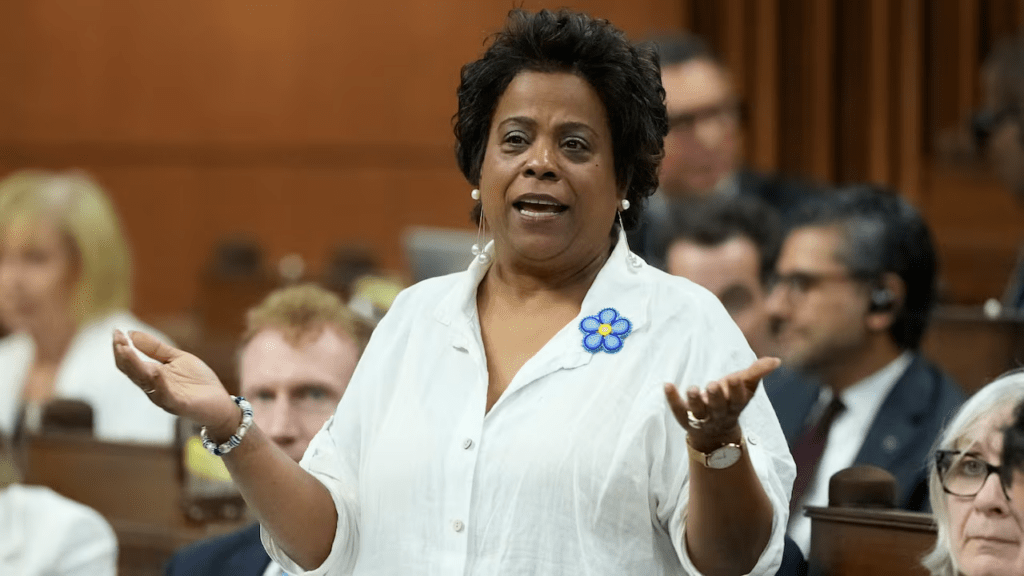
Federal Health Minister Marjorie Michel says she’s concerned Alberta’s new dual-practice health-care model could spell trouble for the public health-care system. Adrian Wyld/The Canadian Press
With Alberta’s dual-practice health-care model set to roll out in September, Canada’s health minister is speaking out about why the policy troubles her.
Alberta’s Health Statutes Amendment Act, 2025 (No. 2), also known as Bill 11, passed in Alberta’s legislature late last year. It allows some physicians in the province to provide care in both the private and public health-care fields.
The provincial government has touted the move as one that could relieve the strain on Alberta’s public health-care system.
In a recent interview with the Toronto Star, federal Health Minister Marjorie Michel said she had concerns about how the legislation allowing for a dual-practice model could co-exist with the Canada Health Act.
On Monday, Alexandre Bergeron, Michel’s press secretary, confirmed to CBC News that a letter was sent by the federal minister to the Alberta government on July 24, asking the province to protect its public health system.
“As the guardian of the Canada Health Act, our focus is to protect the integrity of the public health-care system and ensure that all Canadians, including every Albertan, can receive health care based on medical need, not on their ability to pay for it,” he wrote in a statement.
| Does Alberta’s dual-practice health-care model violate the Canada Health Act? |
| The federal health minister has written a letter to the Alberta government to ensure the Canada Health Act is protected when the province rolls out a dual-practice health-care model in September. As Travis McEwan reports, an Alberta cabinet minister is defending the model. CBC News Alberta. Aug 17, 2027 |
Bergeron said Michel will continue to work closely with the Alberta government about its concerns with the new model.
In a statement provided to CBC News, Alberta Hospital and Surgical Health Services Minister Adriana LaGrange said the delivery of health care in the province is outside federal jurisdiction.
“Dual practice does not violate the Canada Health Act,” LaGrange said. “The act does not prohibit private practice outside the publicly insured system.”
“Albertans who choose to pay privately for eligible elective surgery should be able to do so here at home, rather than travelling out of province as they have done for decades.”
Alberta doctors who hope to qualify for working in both the public and private spheres are required to do a minimum number of hours in the public system.
| Experts say case is within federal jurisdiction, to an extent |
Steven Lewis, a health policy expert based in Vancouver, said the Alberta government seems poised to enter into a lengthy conflict with Ottawa on the matter.
He said he believes the new model could open up more weaknesses in an already strained public health system.
“The Canada Health Act, which is now 42 years old, was originally passed in order to prevent extra-billing that physicians in the public system [had] in some provinces,” Lewis said in an interview.
“They didn’t have to necessarily extra-bill everybody, but they certainly extra-billed some patients and Ottawa stepped in and said, ‘We need legislation to be very clear, you can’t do this.’ ”
“Taking some portion of practice out of the public system and reserving it for some people who are paying extra pretty much has to compromise access in the public system.”
Lewis pointed to the rise in the number of boutique clinics where people can pay for memberships. He said enforcement in those areas has been lax and he believes it’s important for the federal government to encourage more oversight to protect the public health system.
Lorian Hardcastle, assistant professor and health policy expert at the University of Calgary, said she isn’t surprised the federal government has concerns about the model.
She said she believes the federal government is not overstepping in its involvement because public dollars go to funding Alberta’s health-care system.
“Those people waiting in the public system are often going to be those who need care the most,” Hardcastle said.
“The federal government is going to want to know how doctors are spending their time, [and] if the province is going to limit how much time doctors can spend treating private patients.”
Hardcastle said if the federal government feels the dual model violates the Canada Health Act, it can decide to withhold or claw back funding for Alberta’s health-care system.
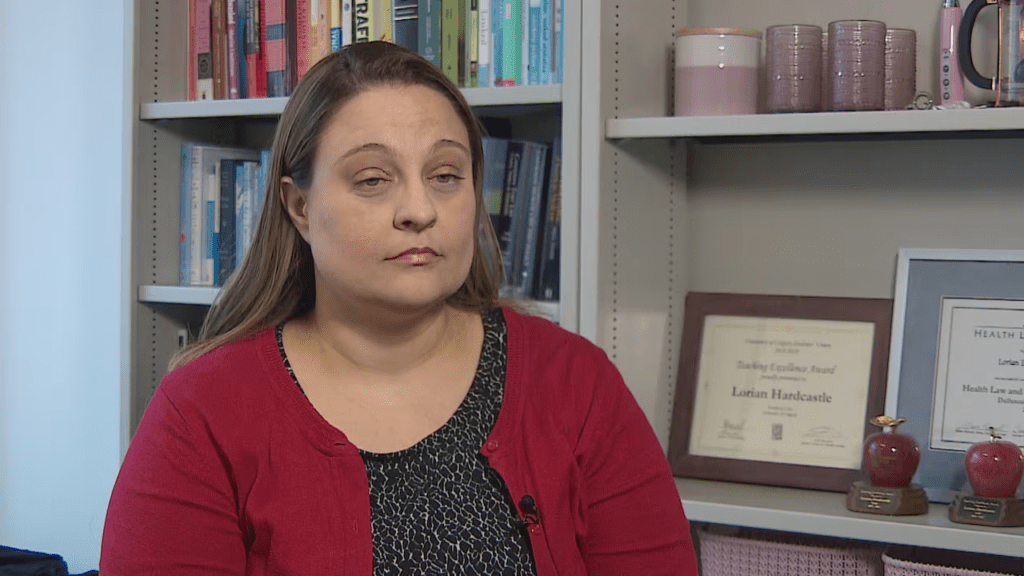
Lorian Hardcastle is a health law professor at the University of Calgary. James Young/CBC
However, she said, it’s unclear if that would be a good idea for the federal government, given the current political climate.
“The federal government also has to question whether withholding money… might send a message to the province — like what impact is that going to have on patients, depending on the amount withheld,” said Hardcastle.
She said she believes the provincial government will need to properly monitor the new model, ensuring private practices don’t encroach on public practices, in order to quell the federal government’s concerns.
| Emma Zhao Reporter |
| Emma Zhao is a reporter with CBC Edmonton. You can reach her at emma.zhao@cbc.ca |
 Source CBC News
Also see
Alberta legislation could pave way for two-tiered health-care system, new report says CBC
What Alberta’s public-private doctor plan could mean for insurance, physician burnout, nurses and more CBC
Advocacy groups call on feds to review Alberta’s Bill 11 health-care reforms CBC
Converting doctor’s offices to premium clinics could spawn a new health-care crisis CBC
Alberta & Bill 11 Canadian Doctors for Medicare