
Supervised physical therapy improves short-term knee pain and function after ACL surgery in young adults
Exercise-based rehabilitation and education can reduce the chance of knee osteoarthritis after ACL reconstruction in people under 40, as well as improve pain and quality of life, a study by La Trobe University researchers has found.
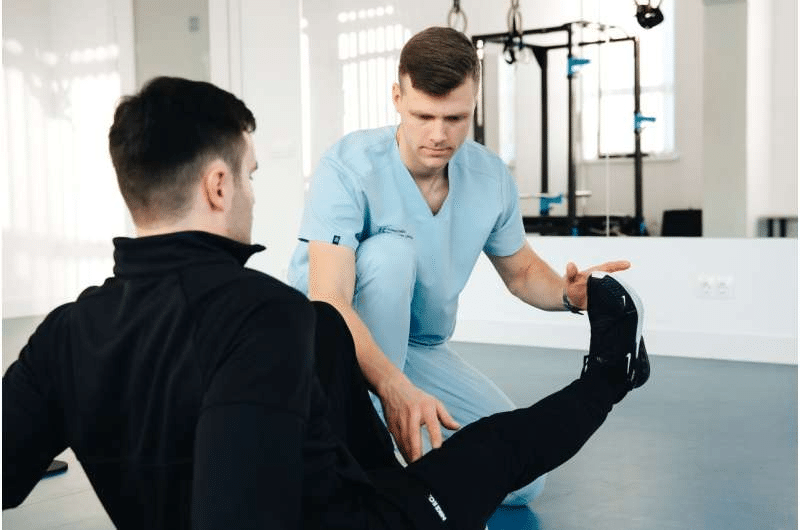
Credit: Funkcinės Terapijos Centras from Pexels
by La Trobe University via Medical Xpress September 28, 2026
Edited by Sadie Harley, reviewed by Andrew Zinin
Around half of people are dissatisfied with their knee health two years after ACL reconstruction, and within a decade, half develop early-onset knee osteoarthritis before age 40.
Clinical guidelines recommend exercise-based rehabilitation with education after ACL surgery, but patients often receive care that does not follow these guidelines. Many patients and health care providers also believe that exercise is harmful to knee cartilage.
| Testing rehabilitation after expected recovery |
The La Trobe SUPER-Knee clinical trial was the first to assess the effectiveness of exercise-based rehabilitation and education more than nine months after ACL surgery—when a full recovery is expected but often not achieved.
Researchers from the La Trobe Sport and Exercise Medicine Research Centre studied 184 people ages 18 to 40 with persistent knee problems one to three years after ACL reconstruction. They compared a progressive exercise therapy program with a single education session.
The results have been published in the Annals of Internal Medicine.
| Stronger muscles without cartilage deterioration |
Lead researcher associate professor Adam Culvenor said participants who followed the four-month, physical therapist-led exercise program showed improvements in outcomes and muscle strength without any deterioration of knee cartilage or worsening of early osteoarthritis.
“Currently we don’t have any high-quality evidence for what treatments should be offered to young people at risk of early-onset knee osteoarthritis. Our SUPER-Knee study changes this and addresses a globally recognized research priority,” Culvenor said.
“Our study showed physical therapist-supervised exercise therapy and education is safe and should be recommended to improve the knee health of young people at high risk of early-onset osteoarthritis following ACL reconstruction.
“The evidence generated by the SUPER-Knee trial can be used to update international clinical practice guidelines for rehabilitation following ACL reconstruction and could be a lifeline for young people struggling after serious knee injuries.
“The intervention is ready to be used by local health professionals with minimal specialized equipment or staff training.”
| Years of pain after surgery |
Ruby Cumming tore her ACL when she was 24, playing AFL in 2019. She had reconstructive surgery within six weeks because she wanted to get back on the football field as quickly as possible. However, rehabilitation lasted years, and she never returned to football.
“I thought if I had the surgery and did the rehab I’d be able to get back to normal. After surgery affected my entire life—not just football—I changed my outlook and decided I wanted to avoid reinjuring my knee, so I haven’t played contact sports since,” Cumming said.
“Experiencing regular pain, not being able to walk, taking public transportation to work and living independently all became really challenging for me.”
Cumming said she was diligent with her rehab, visiting a physical therapist regularly and doing her exercises daily and then weekly, but she continued to experience varying levels of pain every day for three to four years.
“When I joined the SUPER-Knee program and did weekly physical therapist-supervised rehab, this improved my pain significantly,” Cumming said.
 Source Medical Xpress
| References |
West TJ, Bruder AM, Crossley KM, Girdwood MA, Scholes MJ, To LK, Couch JL, Evans SCS, Haberfield MJ, Barton CJ, Roos EM, De Livera A, Culvenor AG. Does the one-leg rise test reflect quadriceps strength in individuals following anterior cruciate ligament reconstruction? Phys Ther Sport. 2023 Sep;63:104-111. doi: 10.1016/j.ptsp.2023.07.008
Culvenor AG, West TJ, Bruder AM, Scholes MJ, Barton CJ, Roos EM, Oei EHG, McPhail SM, Souza RB, Lee J, Patterson BE, Girdwood MA, Couch JL, Crossley KM. Recruitment and baseline characteristics of young adults at risk of early-onset knee osteoarthritis after ACL reconstruction in the SUPER-Knee trial. BMJ Open Sport Exerc Med. 2024 Apr 4;10(2):e001909. doi: 10.1136/bmjsem-2024-001909
Grover HJA, Bruder AM, West TJ, et al. Prevalence of, and Factors Associated With, Symptoms of Anxiety and Depression in Young Adults With a Symptomatic Knee After ACL Reconstruction: Results from the SUPER-Knee study. Orthopaedic Journal of Sports Medicine. 2025;13(9). doi:10.1177/23259671251371155
Adam G. Culvenor, Andrea M. Bruder, Thomas J. West, et al. Exercise Therapy and Education for Young Adults With Persistent Knee Problems After Anterior Cruciate Ligament Reconstruction: A Randomized Clinical Trial. Ann Intern Med. [Epub 29 September 2026]. doi: 10.7326/ANNALS-26-02460
Jeffrey B. Driban, Matthew S. Harkey. A SUPER Way to Avoid the Lost Decades of Care After Anterior Cruciate Ligament Reconstruction. Ann Intern Med. [Epub 29 September 2026] doi: 10.7326/ANNALS-26-03792
Also see
Exercise averts younger onset knee osteoarthritis La Trobe University