
Measles outbreak that contributed to Canada losing elimination status highlights risks from persistent immunity gaps
The outbreak that contributed to Canada losing its measles elimination status in November 2025 was concentrated in historically undervaccinated communities with close social networks across Canada, the U.S., Mexico and beyond, creating opportunities for cross-border transmission, concludes a study published by The BMJ.
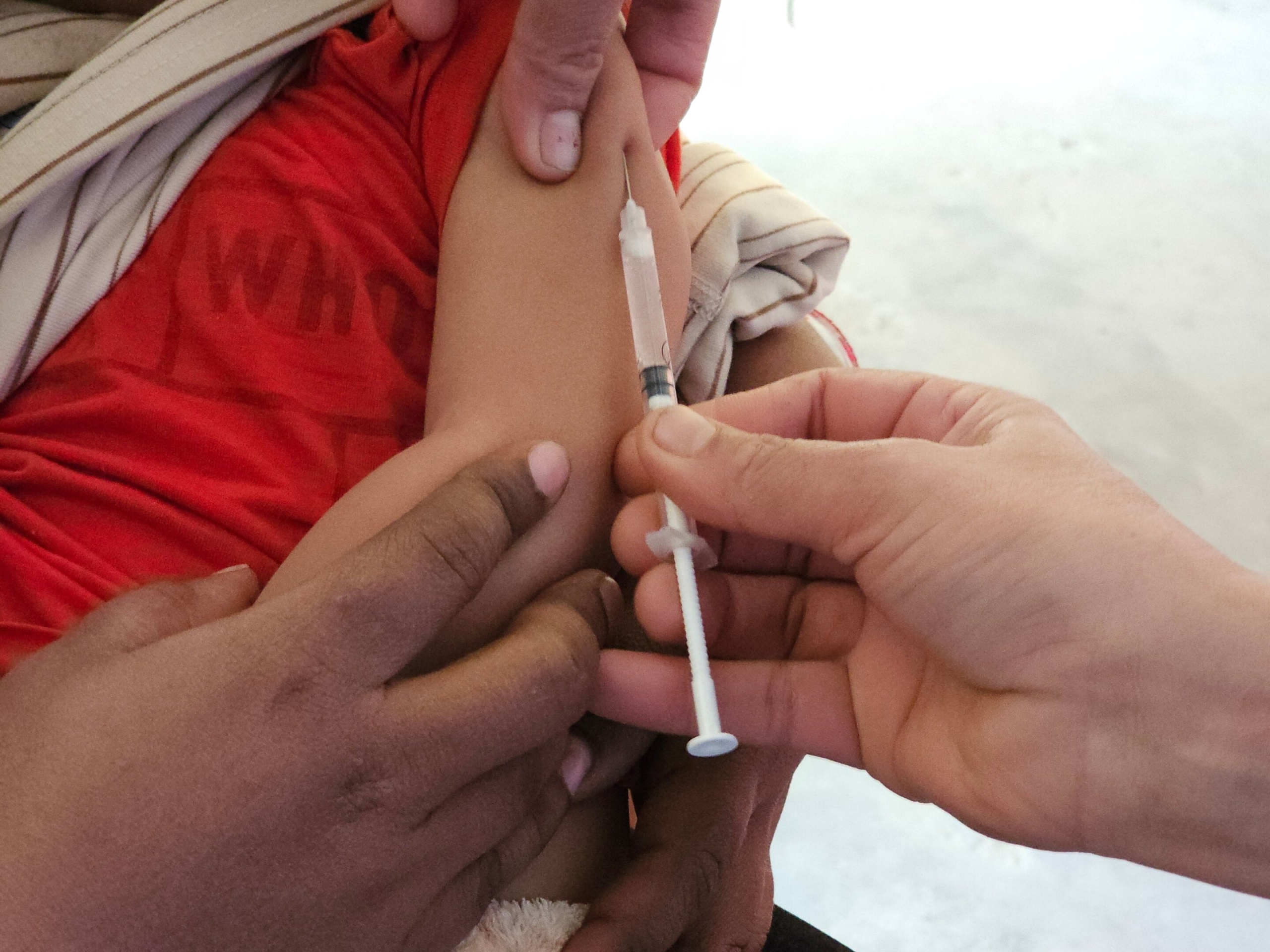
Credit: CP Khanal from Pexels
by British Medical Journal, Medcial Xpress, October 28, 2026
edited by Sadie Harley, reviewed by Andrew Zinin
The researchers say the findings highlight the ongoing risk of measles resurgence in countries that have previously successfully controlled the disease, and underscore the importance of culturally tailored community engagement to build trust and confidence in vaccination and prevent future outbreaks.
Canada achieved measles-free status in 1998 after introducing a two-dose vaccine schedule and a national catch-up program for school-aged children, but lost it in November 2025 after a measles outbreak that involved several provinces.
In Ontario, the outbreak disproportionately affected historically undervaccinated communities—groups with historically low vaccine coverage and close social networks across Canada, the U.S. and Mexico.
To better understand the course of this outbreak and its impact, researchers analyzed measles cases reported to Ontario’s public health surveillance system during the outbreak period (Oct. 28, 2024, to Oct. 6, 2025).
The outbreak consisted of 2,377 cases (2,064 confirmed and 313 probable) over 49 weeks. Most cases (90%) occurred among members of historically undervaccinated communities, with limited spillover into the broader population.
Among the 2,377 cases, around three-quarters (73%) occurred in individuals aged 19 years or younger, 2,121 (89%) were unvaccinated and 97 (4%) had unknown vaccination status.
The outbreak was associated with 166 hospital admissions, 13 admissions to an intensive care unit, 51 infections during pregnancy, 10 congenital measles infections, one case of encephalitis (brain inflammation) and one infant death.
Laboratory tests identified a distinct measles virus strain that was subsequently detected elsewhere in Canada, and in the U.S., Mexico and the Netherlands due to close social ties within and between undervaccinated communities combined with the high transmissibility of measles.
The researchers acknowledge that their analysis is subject to limitations inherent to public health surveillance data, and note that the number of cases and associated complications may be higher than what is reported in the study.
In addition, the proportion of cases in undervaccinated communities is likely to be conservative, reflecting challenges in data collection for a variety of reasons, including mistrust among some community members and concerns from public health staff about the risk of stigmatization of affected groups during the outbreak.
However, they say this measles outbreak illustrates the fragility of measles elimination in the presence of substantial immunity gaps within domestically and globally interconnected communities.
Limited spillover beyond these communities also highlights a high degree of vaccine acceptance in the population at large and the success of local partners in closing immunity gaps as part of the outbreak response, they add.
“Strengthening of immunization systems, improving vaccine coverage and sustaining culturally appropriate engagement to continue to build trust in immunization will be essential to prevent future vaccine-preventable disease outbreaks and to support reestablishing measles elimination,” they conclude.
In a linked editorial, Jennifer Nuzzo at Brown University School of Public Health warns that Canada’s loss of elimination status signals growing vulnerability to infectious disease threats, even in well-resourced high-income countries.
She argues that elimination requires not just high vaccination coverage, but also sensitive disease surveillance, laboratory capacity, rapid outbreak investigations, timely reporting, effective public health responses and public trust.
Failing to stop measles within national borders also makes it harder for countries around the world to keep the disease at bay, she adds.
She urges countries to recommit to measles elimination “not simply to restore a designation, but to stop a dangerous, preventable disease and strengthen the public health systems that protect their own populations and those of their neighbors from other serious infectious threats.”
Provided by British Medical Journal via Medical Xpress
| References |
Impact of a large measles outbreak associated with transmissionin the Americas and Canada’s loss of measles elimination status: descriptive cohort study, Sarah E Wilson,1,2,3,4 Gillian H Lim,1 Mehdi Aloosh,5,6 Adelle Chang On,7 Cara-Lee Coghill,8 Tara Harris,1 Maan Hasso,1,9 Miriam Klassen,10 Christine Navarro,1,2,3 Eleanor Paget,1 Kaitlin Patterson,11 Marina I Salvadori,11,12 Ninh Tran,8 John Tuinema,13,14 Daniel Warshafsky,2,15 Joanne Hiebert16 The British Medical Journal (2026). DOI: 10.1136/bmj-2026-101123
Also see
Canada’s measles outbreak exposes vulnerabilities in disease elimination efforts News-Medical.Net
Canada loses measles elimination status after ongoing outbreaks Medical Xpress
Lessons Learned from Canadian Measles Outbreak Inside Precision Medicine