
How does Alberta’s COVID-19 vaccination rate compare to other provinces? We asked
Seven per cent of Albertans have had a COVID shot this season.
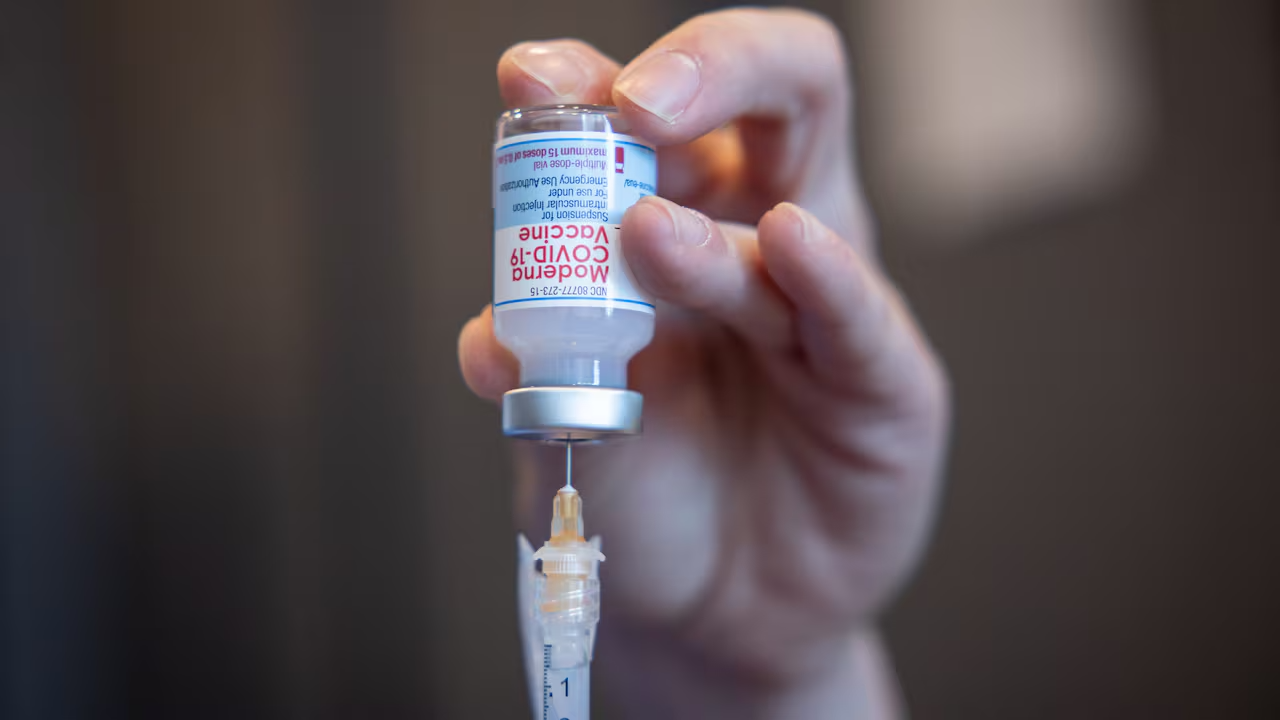
CBC News reached out to other provinces to see how Alberta’s COVID vaccination rate compares. Robert Short/CBC
Jennifer Lee, CBC News Calgary Dec 19, 2025
Alberta’s declining COVID-19 vaccination rate is sparking more concern as it becomes clear how uptake in the province compares to other parts of the country.
Publicly available data shows 6.8 per cent of all Albertans have received a COVID shot so far this respiratory virus season.
That’s down from the 2024-25 season when total uptake dropped to 14 per cent from 17 per cent the year before.
“The current vaccine rate, I think, is disappointingly low,” said Craig Jenne, a professor in the department of microbiology, immunology and infectious diseases at the University of Calgary.
“This virus continues to be dangerous… And we have an important tool that is simply not being used.”
CBC News wanted to understand how Alberta’s COVID immunization rate for this season compares to the rest of Canada so we reached out to all the provinces.
Of the six provinces that responded, British Columbia had the highest COVID-19 uptake, reporting that 18 per cent of its residents have received a COVID shot since the start of its fall immunization campaign.
Quebec, the only other province that has opted to charge for the vaccine, provided information indicating that, of the provinces sharing data, it has the lowest rate outside of Alberta at 11.5 per cent.
At 6.8 per cent, Alberta’s vaccine uptake is lower.
“It’s disturbing,” said Dawn Bowdish, a professor of immunology at McMaster University in Hamilton, Ont.
Bowdish argues charging for the COVID-19 shot sends the wrong message to the public.
Provinces that opt to do so, she said, are adding barriers to vaccination and face challenges with uptake as a result.
“In our social, single-payer health system in Canada people really believe if it’s important the government will pay for it. And when it’s not important the government doesn’t pay for it,” said Bowdish.
“There’s no doubt that the more difficult that you make a vaccine [to get] the less people that take you up on that offer to get a vaccine.”
Alberta was the first province to announce plans to charge many residents $100 for the vaccine.
It is providing the shots for free to high risk groups including those with specific health conditions, health care workers, seniors in care homes and those receiving the Alberta Seniors Benefit, among others.
It stopped short of including all seniors, as recommended by the National Committee on Immunization (NACI). The Alberta government has said most seniors qualify under the eligibility requirements.
Quebec, which followed Alberta’s lead in charging for the vaccine, chose to provide it for free to high risk groups including all seniors over the age of 65.
At the University of Alberta hospital in Edmonton, Dr. Stephanie Smith is not surprised by the province’s vaccination rate.
“Certainly access has been incredibly difficult for people and then cost obviously has been another barrier,” said Smith, an infectious diseases specialist.
Some Albertans reported trouble accessing appointments through online booking early on and others described the process as confusing.
In addition, publicly funded doses, which used to be offered through pharmacies, are now strictly available through public health clinics.
| Alberta government pushes back |
CBC News reached out to the Ministry of Primary and Preventative Health Services several times with questions about Alberta’s COVID-19 vaccination rate.
The press secretary to Minister Adriana LaGrange is defending the Alberta government’s policy.
“Vaccination rates have declined in recent years in Alberta and other places, especially since the pandemic,” said Maddison McKee in a Dec. 11 email.
“Lower uptake of COVID vaccination this season likely reflects the sharp drop in the risk from COVID, reflected in NACI’s current guidance recommending vaccination only for those at higher risk.”
McKee said providing universal coverage for COVID-19 vaccines is not cost-effective and noted hospitalizations have dropped dramatically in recent years.
“We’re not funding universal vaccination because the evidence doesn’t warrant it, and NACI and similar expert bodies in other countries such as the U.S. and the U.K. don’t recommend it…. Separate analysis in Quebec showed the same thing, which is why Quebec is taking a substantially similar approach to Alberta’s,” she said.
According to Dr. Lynora Saxinger, an infectious diseases specialist at the University of Alberta, a number of jurisdictions are moving toward risk-based public health vaccine policies.
“I think the big difference here is that the NACI guidelines, and most of the other guidelines I’m aware of, really do highlight age as an independent risk factor. So just being over 65 adds to your risk of severe COVID,” she said.
“And that’s the group that, in the current Alberta guidelines, is the most conspicuous difference from the recommendations pretty much everywhere else.”
McKee’s statement, on behalf of Minister Adriana LaGrange, said 90 per cent of seniors are eligible for a COVID-19 shot in Alberta.
When asked by CBC News to provide the specific data used as the basis for that statement, McKee did not respond.
The Ministry also did not answer questions about whether it is satisfied with Alberta’s current vaccination rate or respond directly to ongoing concerns, raised by health experts, about barriers to access.
McKee accused some doctors, including the Alberta Medical Association, of “ignoring the evidence” and said, “journalists continue to torque their coverage to support attacks on our approach, when it’s clearly in line with the evidence and with expert guidance.”
In a follow-up email CBC News asked the Ministry about Alberta’s lower rate compared to other provinces.
“Our COVID vaccination rollout is in line with the evidence cited by NACI from Canada, the U.S., and the U.K., as well as the separate analysis published in Quebec,” McKee’s statement said in part, noting other jurisdictions have seen significant reduction in vaccination rates as well.
| ‘Missed opportunity’ |
Meanwhile, Saxinger said there is no doubt the number of cases of severe COVID is far lower now than it was early in the pandemic. But, she said, there is a considerable burden of disease among high risk people.
“That is something that has never gone away. And it is something that is preventable,’ she said.
Alberta’s respiratory virus dashboard shows 23.2 per cent of seniors have received a shot so far this season.
According to Jenne, that’s not high enough.
“We do know that this vaccine continues to protect. It continues to protect individuals from severe disease, from hospitalizations and ultimately, for some Albertans, death from COVID,” he said.
Saxinger calls the situation a “missed opportunity.”
“There’s enough cases around that we are still seeing people coming into hospital,” she said.
“And right now I’ve got to say hospital resources are stretched very, very thin. And it would make a difference if we could prevent some of those severe cases.”
According to provincial data, there have been 716 COVID hospitalizations, including 44 ICU admissions, and 68 Albertans have died since the end of August.
| Jennifer Lee Reporter |
| Jennifer Lee is a Senior Reporter for CBC News based in Calgary. She covers health stories for CBC’s web, radio and video platforms. If you have a story to share, let her know. |
 Source CBC News Calgary
Also see
McMaster researcher helps solve mystery behind rare clotting after adenoviral vaccines or infection McMaster University
Some Albertans frustrated, Health Link overwhelmed as COVID-19 shots roll out to general public CBC
Alberta parents still struggling to book COVID shots for kids as doctors raise alarm about access CBC
Think you’re not eligible for a free COVID shot in Alberta? Double check, experts urge CBC
Doctors urge vaccination as influenza upswing hits Alberta CBC
Alberta population keeps growing, while Canada’s dips in Q3: StatsCan CBC
Alberta emergency rooms hit with wave of influenza patients CBC
Health officials warn of surge of deadly flu virus in largely unvaccinated Saskatchewan CBC