
Alberta orders fatality inquiry into death of man at Edmonton emergency room
Albertans will get an update Thursday on the state of the province’s acute care system, as frontline doctors continue to declare that provincial hospitals are dangerously overcrowded.
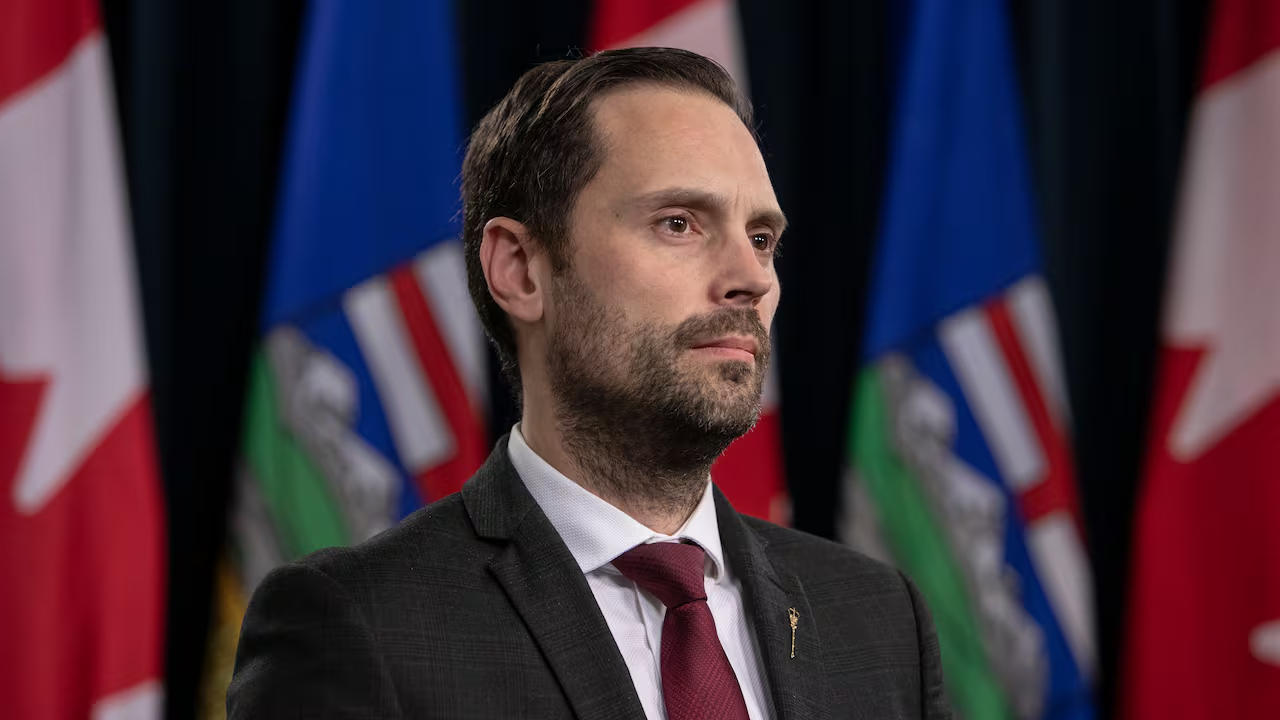
Matt Jones, Minister of Hospital and Surgical Health Services, looks on during a press conference at the Legislature in Edmonton, on Wednesday, December 10, 2025. Amber Bracken/The Canadian Press
Wallis Snowdon, CBC News Edmonton
| Government will also create triage liaison physician role at major Alberta hospitals |
A fatality inquiry has been ordered into the death of a 44-year-old man who died while waiting to be seen by a doctor at an Edmonton emergency department.
At a news conference Thursday, Alberta’s minister of hospitals announced the independent, judge-led investigation as well the creation of a new triage liaison physician role at hospitals in Calgary and Edmonton.
Prashant Sreekumar, 44, died on Dec. 22 inside the emergency department of Edmonton’s Grey Nuns Community Hospital after allegedly waiting nearly eight hours to see a doctor about his chest pain.
Matt Jones, Alberta’s minister of hospital and surgical health services, said Thursday that the fatality inquiry is needed because there are answered questions about the case.
“While system-level improvements are underway, a detailed, independent and public review of how the specific case was managed also needs to be undertaken,” he said. “We owe that to his family and to all Albertans.”
The fatality inquiry will issue public findings and recommendations, Jones said.
“I need to fully understand the circumstances around Mr. Sreekumar’s death, and I still have questions that need to be answered. … This is going to be a public, transparent and independent process done by a judge, and I’d like to see that process play out.”
| WATCH | Fatality inquiry to look into Edmonton ER death |
| The province is responding after a man’s family says he died while waiting to be seen by a doctor at an Edmonton hospital. The government says it is now looking into the death, and implement other changes to try to reduce hospital capacity and support patients waiting for care. CBC |
Craig Gillespie, a Calgary-based lawyer representing Sreekumar’s wife, said the inquiry may lead to change while providing Albertans — including the family — with answers.
“People understand that nobody goes to work expecting to have a bad day or a bad outcome, but unfortunately for the families that experience this, that doesn’t change what’s happened to them,” said Gillespie. “It’s a real challenge and it’s a real problem, and this family and others are the ones that are left holding the bag for it.”
| New triage physicians |
Jones said a quality assurance review completed by Acute Care Alberta following Sreekumar’s death has already resulted in immediate changes to improve care on the front line.
A new pilot project will see new triage liaison physicians deployed in Alberta’ busiest emergency departments in Calgary and Edmonton, including at the Grey Nuns.
“There is no doubt that pressures in the system, and specifically at the Grey Nuns’ emergency department on Dec. 22, impacted care,” Jones said.
Aaron Low, chief medical officer of Acute Care Alberta, said the new liaison physicians will work alongside the triage nurses, providing some care to patients in the waiting room and helping to identify those who “can’t afford to wait.”
Dr. Brian Wirzba, the president of the Alberta Medical Association, said though the liaison physician positions can positively affect busy emergency departments, it may not be the best way to address capacity concerns.
“It’s a bit of a Band-Aid. It’s an important Band-Aid, but it’s not dealing with the root cause. … We can’t discharge patients as effectively as we’d like,” said Wirzba.
Low said he would not speak directly to all of the recommendations made by the quality assurance review. The proceedings are “protected” and the details will remain confidential, he said.
The current strain on Alberta’s emergency departments has prompted broad concern from physicians across the province who have called on the province to declare a formal emergency due to overcrowding.
Wirzba said the Alberta Medical Association itself did not call for a state of emergency, noting the province already has the authority to address concerns.
“They don’t need extraordinary powers to address this. We’re just asking that they actually use those powers appropriately in the right ways to actually fix the issue,” said Wirzba.
| Calls of a crisis |
Alberta health officials at the news conference said the strain has started to ease on the acute care system. Jones said hospitals, especially in Calgary and Edmonton, had experienced “significant pressure” in recent weeks.
He said officials believe the worst of the flu season is over and efforts to better manage elevated patient loads are working.
“Hospital and emergency department pressures are very real,” Jones said. “Along with the seasonal rise in respiratory virus season, our high population growth, our aging and more medically complex population and even cold weather all exacerbate these pressures.”
Earlier this week, the agency said it is working to create additional capacity with measures that include dedicating 336 beds for flu patients, accelerating patient discharges when possible and opening designated surge spaces to manage increased demand.
According to David Diamond, interim CEO of Acute Care Alberta, the inpatient occupancy in the province’s large hospitals sits at 102 per cent, including temporary and surge spaces that are currently open to meet the elevated demand.
Respiratory virus hospital admissions are down from a peak of 995 at the end of December to 675 today, he said.
He said, despite some relief, the system is facing “sustained pressure” and it may take some time for the system to recover from the surge in patients.
Physicians have been calling for an urgent response to improve patient care as hospitals across the province contend with staffing and capacity issues.
Dr. Paul Parks, president-elect of the section of emergency medicine with the Alberta Medical Association, has called for the provincial government to declare a state of emergency to ensure patient loads are better managed.
Doctors have also called for better co-ordination and leadership within Alberta’s health-care system which has undergone sweeping restructuring.
In a statement issued Monday, the Alberta Medical Association said patient outcomes are suffering due to overflowing emergency departments
According to the association, Alberta hospitals have run over 110 per cent capacity for more than a year while the number of patients leaving the emergency department without being seen has increased approximately 77 per cent from 2019 to 2024.
Jones said Alberta’s health-care system requires both a long-term capital and workforce strategies so plans are not reactionary and not politicized.
“I believe that there could have been greater [health care] capacity built in the years and decades, frankly, prior to today. But the government deals with competing priorities across the board.”
The needs of the system are complex and the province is taking steps to ensure the capacity is there when it’s needed in the future, Jones said.
| Wallis Snowdon Reporter |
| Wallis Snowdon is a journalist with CBC Edmonton focused on bringing stories to the website and the airwaves. Originally from New Brunswick, Wallis has reported in communities across Canada, from Halifax to Fort McMurray. She previously worked as a digital and current affairs producer with CBC Radio in Edmonton. Share your stories with Wallis at wallis.snowdon@cbc.ca |
| With files from Julia Wong |
 Source CBC News Edmonton
Also see
Alberta emergency doctors compile list of what they say are 6 potentially preventable ER deaths CBC
Minister says Alberta emergency room deaths and poor outcomes are exceptions to the norm CBC
Alberta orders review after man dies waiting in Edmonton emergency department CBC
Alberta needs to call state of emergency over crowded hospitals, physicians say CBC
Alberta orders review after man dies waiting in Edmonton emergency department CBC
Police watchdog investigates after 36-year-old dies in southeast Edmonton jail cell CBC
Fatality inquiry examines RCMP actions in fatal shooting on QEII Highway CBC
Alberta NDP calls on UCP government to acknowledge, address ER capacity ‘crisis’ CBC
Alberta shuts down supervised drug consumption site in Edmonton hospital CBC
Police investigating man’s death at Saskatoon hospital after fight with security CBC
Charges pending after health-care worker assaulted at Edmonton hospital CBC