
Amid a Rise in Knee Injuries, Tips for Prevention and Recovery
A sports medicine expert shares his tips for treating and recovering from the most common knee injuries.
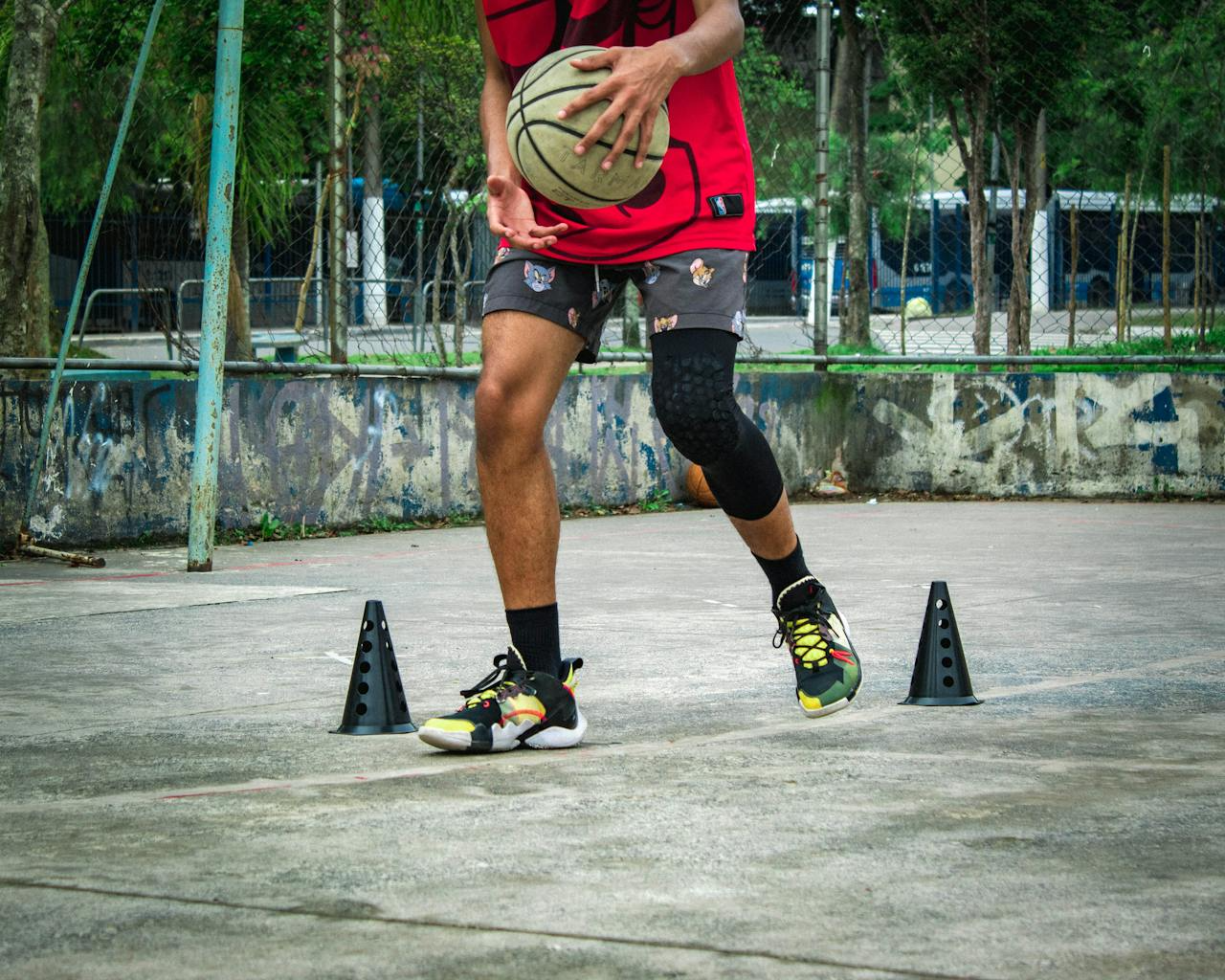
Credit: Dayvison Tadeu, Pexels
by Emily Brognano, Tufts University January 6, 2026 via Medical Xpress
Does it seem like the number of people you know who have sustained knee injuries has increased recently? That’s likely because of a rising incidence rate in acute knee injuries, as documented and analyzed in a 2022 study.
These injuries can include non-operative types, which would be treated with rest and physical therapy. There are also more severe cases, such as when the anterior cruciate ligament (ACL) is torn, which requires a surgical procedure to return to activity.
Matthew Salzler, associate professor of medicine at Tufts University School of Medicine, chief of sports medicine at Tufts Medical Center, team physician for Tufts University Athletics, and a practicing orthopedic surgeon, is an expert in diagnosing and treating knee injuries.
He recently spoke with Tufts Now about why our knees are so frequently injured, what we can do to prevent injury, and what type of treatments are available in the case an injury does occur.
| When someone is referred to an orthopedist due to a knee injury, what might they be diagnosed with? |

Photo: Courtesy of Matthew Salzler
Matthew Salzler: There are a lot of different types of knee injuries. They range from fractures to soft tissue injuries, and within soft tissue injuries there are overuse injuries, such as tendonitis, tendinopathy, IT band syndrome, jumper’s knee as well as traumatic injuries. Patients are also referred for atraumatic pain syndromes in the knee. There are common injuries that people tend to think of when they imagine knee injuries—the ones to stabilizing ligaments, to the menisci, to the cartilage.
| Can you go into further detail about the most prevalent ligament injuries? |
There are four main stabilizing ligaments in the knee that can be injured, which are the anterior cruciate ligament (ACL) in the center of the knee, posterior cruciate ligament (PCL) in the back of the knee, medial collateral ligament (MCL) on the inside of the knee, and lateral collateral ligament (LCL) on the outside of the knee.
Other than ACL injuries, many of the other ligament injuries are treated non-operatively when they occur in isolation, meaning no other components in the knee are impacted or injured. ACL tears are the exception and are the ones we probably talk about the most because they are treated operatively.
| Can you say more about non-ligament injuries? |
There are many types of non-ligament knee injuries, the most common being injuries to the menisci and cartilage. You have two menisci, a medial meniscus and the lateral meniscus. They can be torn in different activities. There are also many different tear patterns, and all those tears are treated differently. For young people and young athletes, a majority of them are treated surgically.
You can also have injuries to cartilage, which makes up the lining of the knee and allows the surfaces of bones to glide smoothly along each other. Injuries to cartilage are complex and can be treated operatively or non-operatively.
The other injuries we see frequently in athletes are patellar dislocations or patellar instability. When your kneecap pops out, that’s a combination of a bone problem, a ligament problem, and a cartilage problem. These injuries are all unique and may be treated non-operatively or operatively.
| When it comes to non-operative injuries, how are they treated? |
That depends on the injury and the severity of it—that’s where it gets tricky. Ligament injuries alone can be graded a 1, 2, or 3. They can be in isolation or they can be in conjunction with other injuries. The treatment also depends on the athlete and their demands. Treatment is often variable even with similar structural injuries and can range from giving it time to heal, to physical therapy, to treatment with a brace or crutches.
| Why does it seem like so many people are sustaining knee injuries now compared to say 20 years ago? |
There are a lot of studies out there that show increases in injury rates, and despite the studies being conducted differently and with different data sets, they all show a rising trend. That said, if you look at any sort of orthopedic surgical treatment, they’ve almost all increased over the last 15 years, ranging from knee replacements to back surgeries.
One of the positive reasons for that is increasing access to medical care. Another is improved surgical results, thanks to better surgical techniques and recovery protocols. These improvements have changed the risk-benefit profile of certain injury treatments, which leads to increased rates of surgery.
To sum it up, patients have improved access to care, and there are more advanced surgeries with better outcomes and less down time. Those things have changed our field as a whole and account for some of the rise in ACL surgeries seen in these studies.
| Why would a girl or woman be more easily injured than a boy or man? |
The one reason that we know definitively contributes to this difference in injury rates is biomechanics. It has to do with the way female athletes—as opposed to male athletes—land when they’re jumping, or the way that their knee twists or turns when they pivot.
If you take a bunch of men and women and have them jump as far as they can on two legs, the men tend to land with their feet wider and with their bent knees pointing straighter, where women will land with their feet closer together and their knees bent more inward. Those mechanical differences, which are true in general across men versus women, are a large part of what make women more susceptible to ACL tears.
| How can girls and women train to prevent these injuries? |
There’s evidence that you can change the way anyone, male or female, lands through participation and practice in ACL injury-prevention programs. Those have been shown, especially in high-risk populations like young female athletes, to decrease the risk of an ACL tears in twisting and pivoting sports.
| Are these exercises that someone needs to do with a physical therapist or trainer? Or can they be done independently? |
There’s no one prevention program that is universally accepted. Though the programs differ, they are all similar in that they all work to change someone’s landing mechanics. They also all stipulate that you have to be doing the exercises routinely for them to work. Unfortunately, you can’t do them one time, stop doing those exercises, and then hope the body keeps the better knee mechanics indefinitely. You must perform the ACL prevention program exercises multiple times a week to create lasting change.
 Source Tufts University via Medical Xpress
| References |
Trends in Australian knee injury rates: An epidemiological analysis of 228,344 knee injuries over 20 years, Maniar N, Verhagen E, Bryant AL, Opar DA. Lancet Reg Health West Pac. 2022 Mar 22;21:100409. doi: 10.1016/j.lanwpc.2022.100409.
Primary surgery versus primary rehabilitation for treating anterior cruciate ligament injuries: a living systematic review and meta-analysis, Saueressig T, Braun T, Steglich N, Diemer F, Zebisch J, Herbst M, Zinser W, Owen PJ, Belavy DL Br J Sports Med. 2022 Nov;56(21):1241-1251. doi: 10.1136/bjsports-2021-105359. Epub 2022 Aug 29. Full text
Also see
Cartilage, Tendons, and More—in the Palm of Your Hand Tufts Now