
UCP pilot projects at Edmonton’s Royal Alex hospital yet to cure jammed ERs, doctors say
“The front line has not noticed any dramatic differences because these pilot projects, as they like to label them, are really just glorified experiments.”
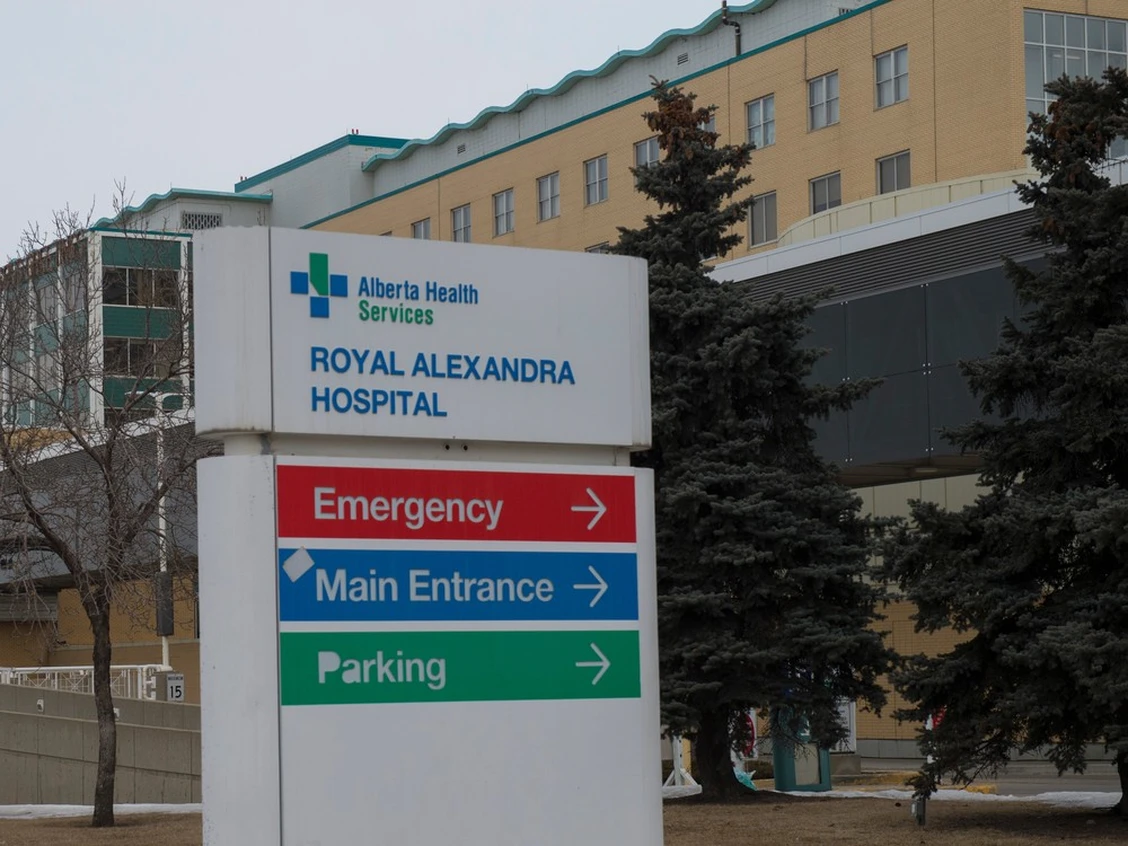
A sign points the way to the Royal Alexandra Hospital’s emergency department in Edmonton in March 2020. PHOTO BY SHAUGHN BUTTS/Postmedia
By Cindy Tran, Edmonton Journal Jan 12, 2026
The Royal Alexandra Hospital in Edmonton is the centre of numerous government pilot projects designed to alleviate hospital burden, and the province is hoping to expand them across Alberta as soon as possible.
But doctors on the ground say they’re not seeing improvements.
Edmonton’s most central hospital now has 24/7 social workers in emergency rooms. Nurse practitioners have been seconded from other areas of the city to free up emergency doctors. The internal medicine unit is redistributing cases to other sites. And alternative level of care (ALC) patients are being transferred out of hospital to other care settings.
Dr. Warren Thirsk, the head of emergency medicine for the Alberta Medical Association and an emergency room physician at the Royal Alex, said pilot projects at the hospital have been constantly evolving.
“The front line has not noticed any dramatic differences because these pilot projects, as they like to label them, are really just glorified experiments and they have not made a big difference,” he said.
“All the initiatives in these pilot projects to fix the number of admitted patients who should be upstairs (but are) sitting in emergency beds have been derailed because of other events inside the hospital.”
In a statement to Postmedia, the ministry of hospitals and surgical health services said the Royal Alex is an “ideal site to test solutions” that could improve patient flow and reduce emergency department pressures before expanding the pilot projects provincewide.
“The Royal Alexandra Hospital was selected for these initiatives because it experiences some of the highest patient volumes and complexity in Alberta,” the statement said.
The province says the pilot project rollout at the hospital began in September 2025.
| Nurse practitioners brought in |
Recently, Thirsk received an email about the latest measure. That involves using nurse practitioners to take over some of the duties of emergency doctors so those physicians can see other patients.
Thirsk said the idea might help slightly, particularly with night doctor burnout, but it won’t do much to improve the waiting room situation.
“It’s not going to make a significant difference to our waiting rooms or to anything else because we have a fixed number of beds, and with these other parts of the system faltering, these initiatives don’t make a difference.”
“We have 30 or more (patients) leaving every day who just get tired of the wait.… When we have these type of waits or backlogs happen in airports, there’s federal policy and quick rules and things are changed. When we have it in health care, we just shrug our shoulders.”
Thirsk said the ER’s waiting room is routinely sitting at 50 patients, though there have been occasions with 100 patients or more waiting at one time. He’s yet to see a day the waiting room is below 30 patients.
When he began practicing 25 years ago, Thirsk said having more than 10 patients in the waiting room was seen as a failure.
“What’s happened over time is we’re accepting now when we see 50 in the waiting room. That’s just situation normal at our hospital.”
A health professional at the Royal Alex who requested anonymity said nurse practitioners were seconded from other sites to the hospital last month. He said the original plan was to hire new nurse practitioners, but the positions couldn’t be filled.
The professional said he’s concerned about the feasibility of the initiatives, since the hospital has been pressed to improve things in just 90 days. He said some of the issues are due to 15 to 20 years of neglect and to attempt to fix things in three months is unreasonable.
The province said there is no strict 90-day timeline for the pilots, adding that some will need to run for several months to collect data for an evaluation. But the priority is to expand them across Alberta.
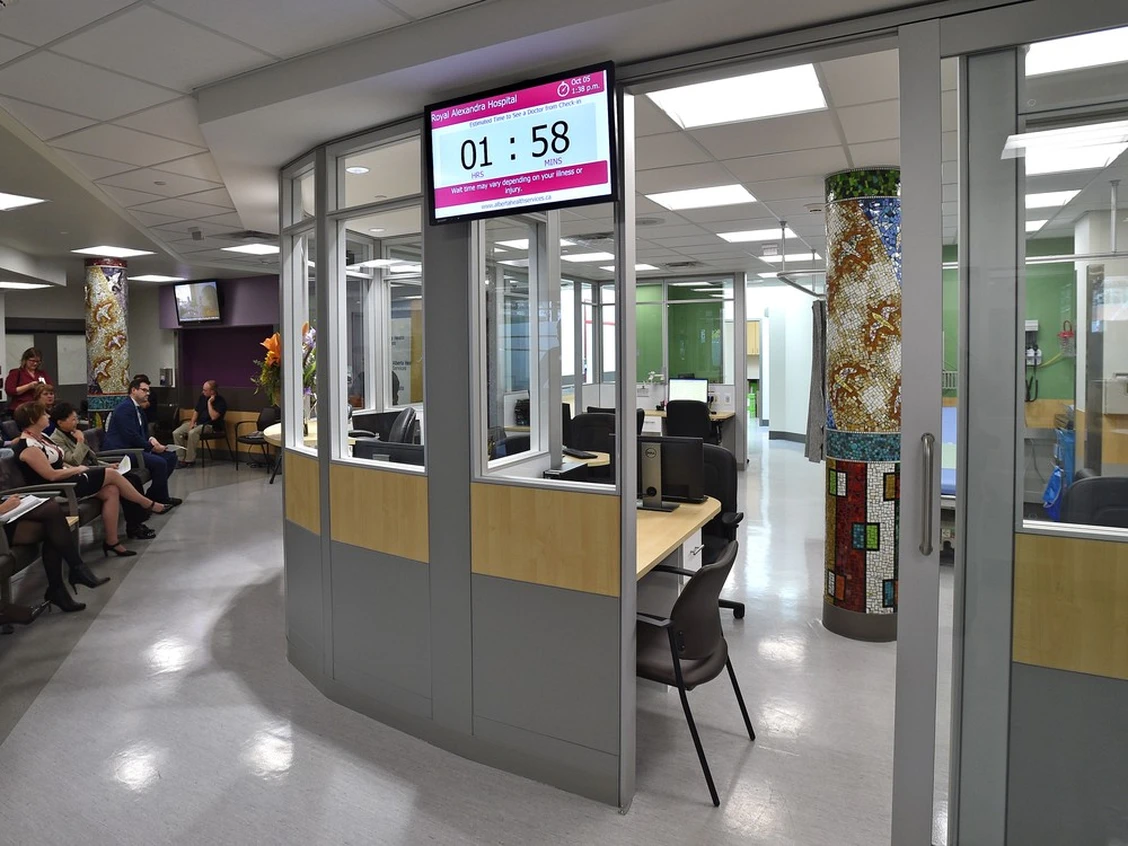
The renovated emergency department at the Royal Alexandra Hospital opened to patients in October 2016. ED KAISER/20076592A
| Internal medicine unit caps patients |
Thirsk and the unnamed health professional both said the internal medicine unit at the Royal Alex placed a cap on the number of patients it can take last month — the first time that’s occurred at the hospital. That means emergency room patients are left waiting, sometimes for days, until they can be transferred to the internal medicine unit, Thirsk said
“Our internal medicine service has decided that they are overloaded, that they are unsafe to look after the 270 to 300 patients they have on their service. And so they have been capping in the last month their admissions for the day and saying, ‘We’re done,’” he said.
“When internal medicine says we’re unsafe and we can’t do it anymore, all the other initiatives grind to a halt because everything ends up in emerg. We are the stress point.”
The Canadian Medical Association describes internal medicine as vital specialty in which physicians diagnose and manage seriously ill patients suffering from “advanced illness and/or diseases of more than one system.”
The unnamed health professional at the hospital said while waiting for space to open up in the internal medicine unit, an emergency doctor on duty becomes the most responsible physician. He said those doctors are handing over patients to each other every eight hours until that patient can be seen by the internal medicine team.
The province said it has implemented a process to “redistribute” internal medicine cases to other sites across the city when required but insisted there is no “fixed cap” for the internal medicine unit at the Royal Alex.
The government said the four health care ministries are undergoing an evaluation with plans to expand initiatives to other hospitals across Alberta.

Assisted Living and Social Services Minister Jason Nixon. Brent Calver/Postmedia
| Around the clock social workers |
The Royal Alex is no stranger to social workers, but a move to staff them 24 hours a day, seven days a week in the emergency department is new.
Assisted Living and Social Services Minister Jason Nixon told Postmedia that the province made the change after noting a high volume of homeless individuals coming into the hospital.
“We started to see some challenges and became aware of the challenges that were happening in the emergency room, particularly the Royal Alex, but we do see it in other emergency rooms around what I would call traditional social services clients that were trying to access services that they need often through the ER but weren’t necessarily in an emergency situation,” Nixon said.
He said the Royal Alex has seen dozens of homeless individuals try to access homeless supports at the hospital. The province has also added a 24/7 service to transport individuals from the emergency room to supports like shelters, housing and recovery services.
As for alternative level of care patients — those stuck in a hospital bed when they should be in an assisted living facility or other setting — Nixon said the province chose the Royal Alex for a pilot project because the hospital has a disproportionately high number of them. The initiative is now provincewide.
According to the ministry of hospital and surgical services, addressing ALC patients is part of its response to ease pressure on the acute care system, particularly during flu season. It includes accelerating discharges and transfers where appropriate and limiting non-essential inbound transfers.
“Combined initiatives… have resulted in a 36.9 per cent reduction in ALC patients at the Royal Alexandra Hospital since Aug. 18,” a ministry statement said.
According to Alberta Health Services, the Royal Alex has 869 beds.
Sarah Hoffman, the Alberta NDP’s hospital and surgical facilities critic, said it’s good for health leaders to try new things. However, Edmonton ultimately needs a new hospital, she said, pointing to plans for a new facility in south Edmonton that was halted by the UCP government.
“Everyone at the Royal Alex is working full out,” Hoffman said.
“We’ve seen a lot of changes in the way vulnerable populations are treated by Danielle Smith and the Conservative government over the last few years — shutting down a lot of community support services and agencies, and that drives people into the emergency department, which is not good for anybody.”
 Source Edmonton Journal
Also see
Senior with influenza waited 90 hours in Edmonton emergency department, family says The Globe and Mail
Ford government makes progress on primary care, but 2 million still without access Global News