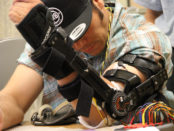
New software designs optimized, personalized treatments for movement impairments First-of-its-kind computer-aided engineering tool could aid clinical treatment … READ MORE

Non-invasive spinal modulation for Cerebral palsy SpineX, a medtech company based in California, has developed the Spinal Cord … READ MORE
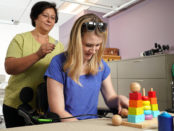
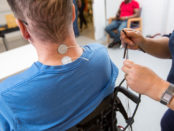
New treatment to regain hand and arm function after spinal cord injury Using physical therapy combined with a noninvasive method of stimulating nerve cells … READ MORE
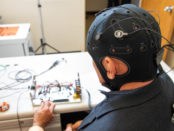
A next-gen EEG could help bring back lost brain function SLAC and Stanford researchers are developing a device that combines electrical brain … READ MORE
Changes in older people’s central nervous system leads to compromised ability to sense movement The central nervous system of older individuals responds to movement and initiates … READ MORE
Finding one’s way home The Otic placode gives rise to the inner ear in vertebrates. A new study shows that … READ MORE
New wearable sensor for people with incomplete paraplegia A new electromyography biofeedback device that is wearable and connects to novel … READ MORE
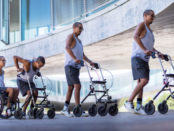
Spinal stimulation enables three people with paraplegia to walk again Combined with other recent studies, new evidence points to electrical stimulation as … READ MORE
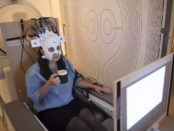
First language study using new generation of wearable brain scanner Scientists have carried out the first study of human cognition using a new … READ MORE
Tomorrow’s doctors must be engineers too The medical profession is changing, and so must medical education. When King Li went … READ MORE
Mind-controlled robotic third arm gives new meaning to “multitasking” Need a helping hand? Tell this robotic arm—with your mind—to grasp that thing … READ MORE
Non-surgical recovery of function: Not a fantasy “Improved voluntary hand function occurred within a single session in every … READ MORE
Leg exercise is critical to brain and nervous system health In a new take on the exercise truism ‘use it or lose it,’ researchers … READ MORE
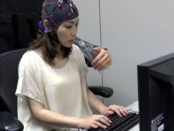
Humans and machines learn together to win a competition People using brain-computer interface are more efficient when both human and machine … READ MORE
UCalgary scientists discover a new way to battle multiple sclerosis Findings challenge conventional thinking about the root cause of MS. The Dr. Peter … READ MORE
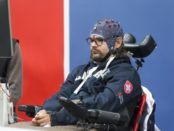
This neural operating system lets paralyzed, voiceless patients communicate Nuro’s new brain-computer interface uses neurological signals to let incapacitated … READ MORE
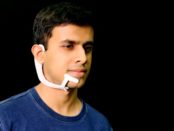
Computer system transcribes words users “speak silently” Electrodes on the face and jaw pick up otherwise undetectable neuromuscular signals … READ MORE
A new wearable brain scanner A helmet records a wearer’s brain activity using magnetoencephalography (MEG) … READ MORE
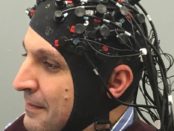
Calgary researchers develop portable brain imaging system to shed light on concussions A volunteer wears the cap, developed at the U of C, which contains small lights that … READ MORE
Rice team designs lens-free fluorescent microscope FlatScope may be the world’s tiniest, lightest microscope for biological … READ MORE
People with tetraplegia gain rapid use of brain-computer interface A new approach to calibrating the pioneering BrainGate brain-computer interface … READ MORE
Brain-computer interface advance allows fast, accurate typing by people with paralysis Stanford University School of Medicine Clinical research led by Stanford University … READ MORE
Stimulator bypasses spine injury, helps patients move hands Experimental treatment improves grip, finger motion up to 300 percent in … READ MORE
Brain-sensing technology allows typing at 12 words per minute Stanford University researchers have managed to use an implanted multi-electrode … READ MORE
Non-surgical approach helps people with paralysis voluntarily move their legs — a first Paralyzed men move legs with new non-invasive spinal cord stimulation. Five men with … READ MORE